Recognizing Peptide Pureness: What 99%+ Truly Suggests
Innovative Peptides suggests a collection of different purity levels to assist you pick the appropriate peptide purity for peptide-based assays and applications. The following list reveals the recommended peptide pureness levels needed for various peptide applications. Peptide recognition is largely executed using mass spectrometry (MS), which gives precise measurements of peptide molecular weight. In addition, strategies such as amino acid analysis and HPLC are used to verify the peptide's identification and pureness, guaranteeing accurate characterization for different applications. We supply peptide identification confirmation using mass-based methods picked for the example and logical objective. This is important when the primary concern is whether the observed element matches the designated peptide or whether an adjustment has actually been incorporated as anticipated.In vivo examinations evaluate absorption, distribution, metabolic process, and discharging (ADME) characteristics, additionally validating efficacy and safety and security. These screening services not just assist clients enhance items specifically during growth however also offer solid data support for governing compliance of peptide formulas. Be cautious of COAs that supply a pureness number without any sustaining chromatographic information, record purity without defining the analytical approach, or checklist a molecular weight without mass spectrometry verification. Tandem mass spectrometry (MS/MS or MS ²) pieces the peptide ions in the gas phase and analyses the fragment masses. This is the gold criterion for peptide identity-- it validates both the make-up and the series. For many peptide projects, outright peptide quantity matters as high as chromatographic pureness.
Trustworthy peptide testing laboratories will certainly offer a collection of modern analytical techniques-- HPLC paired with MS is a must, and accessibility of added techniques like capillary electrophoresis or amino acid evaluation is a benefit. Be cautious of laboratories that Peptide research products do not make use of mass spectrometry together with HPLC, as this can miss out on crucial identification details. Similarly, prevent laboratories that can not show verified logical techniques. According to ICH standards, confirmed approaches imply the lab has actually developed the examination's precision, accuracy, detection restrictions, and so on, making certain the information you obtain are reputable.Example Preparation
It is one factor proper peptide storage space and reconstitution practices issue. Partial peptide pieces can result from incomplete synthesis or post-synthesis degradation. These fragments are usually smaller sized than the target peptide and may elute at various retention times.Peptides Lab Uk
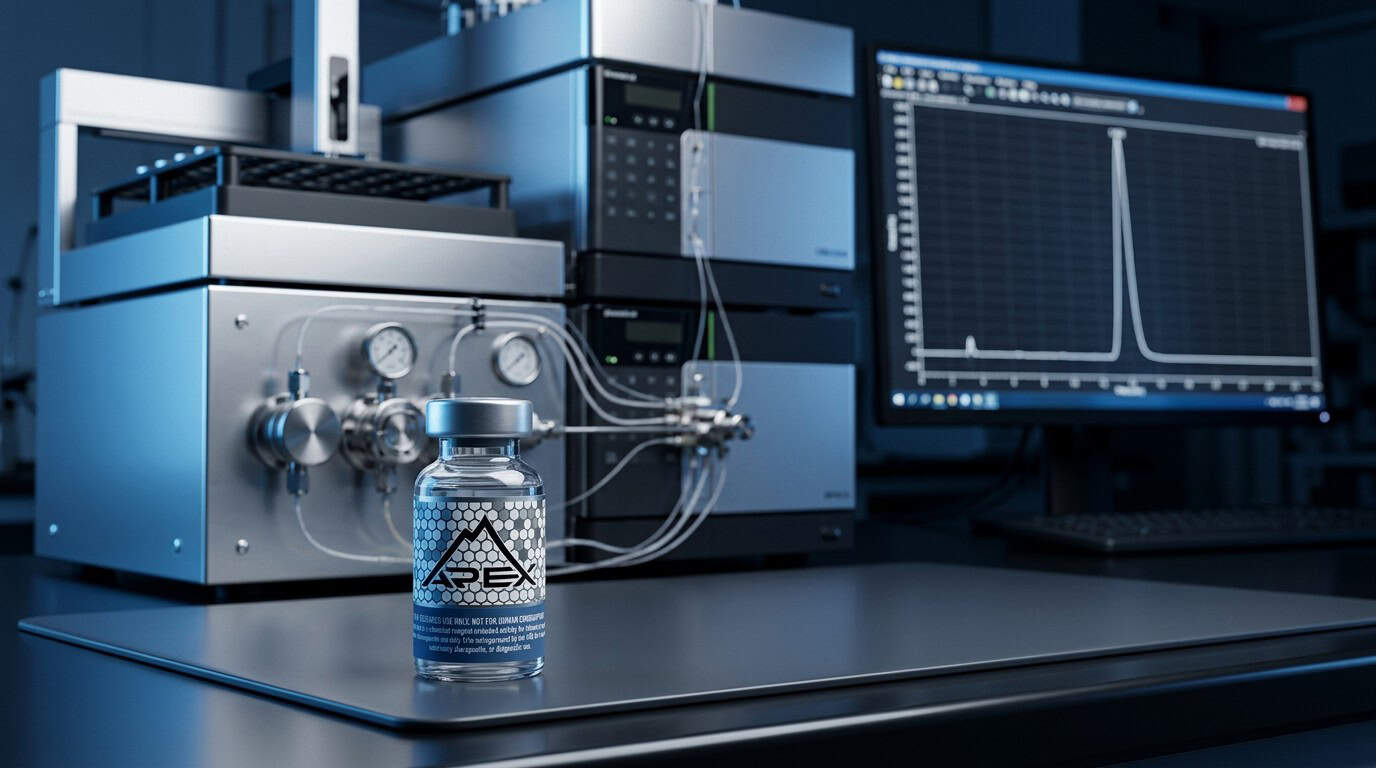
The pureness of peptides is commonly examined using high-performance liquid chromatography (HPLC). HPLC divides peptides based upon their communications with a fixed phase, allowing impurities and spin-offs to be identified and evaluated. Additionally, mass spectrometry (MS) can be used to validate the peptide's molecular weight and series, supplying additional confirmation of pureness by discovering impurities and degradation products. If you have actually ever before obtained a synthetic peptide for a lab experiment, you have actually most likely discovered a pureness percentage on the certification of analysis-- normally worths like 95%, 98%, and even 99%. Peptide pureness is a crucial high quality metric that tells you what portion of a peptide example is the designated product versus unwanted by-products.
In straightforward terms, a peptide provided as 95% pure consists mostly of the target peptide (95%), with the continuing to be ~ 5% made up of contaminations. These impurities can consist of things like reduced or abbreviated sequences, deletion variants, oxidized residues, or other small side-products from the synthesis process. Peptides are extensively used in the medical looks, cosmetics, and biomedical areas as a result of their unique organic task and broad application potential. Nonetheless, the high quality of peptide products directly affects their performance and safety and security, making exact quality screening solutions important.
These can be especially bothersome due to the fact that their chromatographic actions is really comparable to the target peptide, making them tougher to separate throughout filtration. When a peptide is 98% pure, that remaining 2% isn't arbitrary noise-- it's specific, recognizable kinds of by-products. Mass spectrometry determines the molecular weight of a compound with severe precision. For peptides, one of the most common strategies are electrospray ionization (ESI-MS) and matrix-assisted laser desorption/ionization time-of-flight (MALDI-TOF). HPLC divides a mixture into its private elements based on just how each molecule engages with a particularly created column.Not Enough In Vivo/in Vitro Security Data

- One core method is High-Performance Liquid Chromatography (HPLC), the gold standard for analyzing peptide purity.The key logical techniques for peptides include fluid chromatography (LC), typically HPLC, combined with mass spectrometry (MS) for exact molecular weight resolution and series recognition.Pinnacle's How to Read a Peptide COA guide walks through this process detailed.Equipped with this knowledge, you can confidently interpret tags like "95% purity, study grade" and use those peptides to drive your experiments without complication.